AI Output Quality in Project Management - You Approved It, You Own It
AI output quality in project management depends on three things most PMs overlook: the quality of what you fed in, a clear-eyed understanding of what the tool can’t know, and your willingness to override it when your judgement says something’s off. Getting all three right isn’t a technical skill. It’s a professional one - and the accountability is entirely yours.
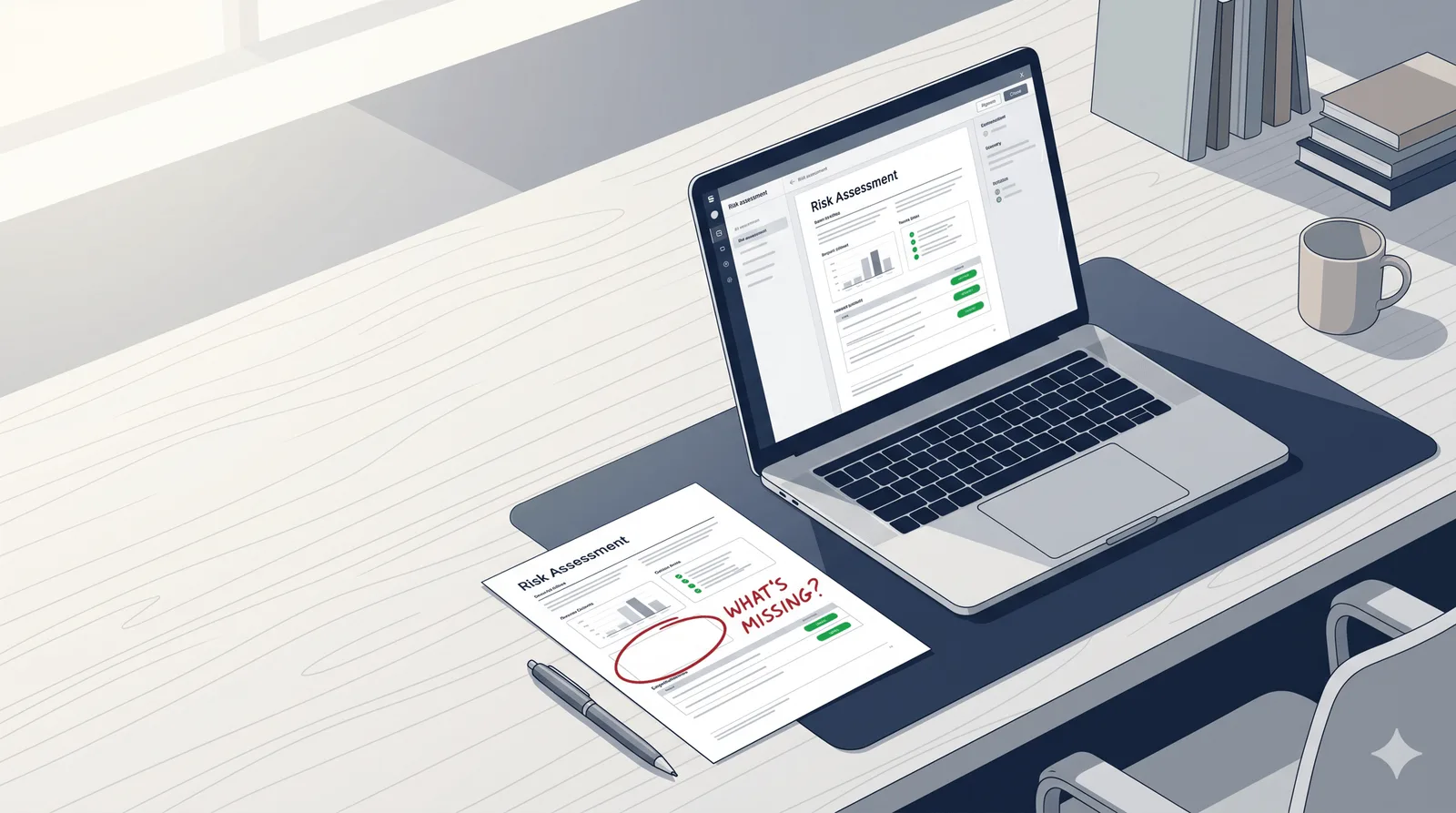
Here’s the scenario. A PM sends a risk assessment to a steering committee. A senior stakeholder surfaces a risk that isn’t in the document. The PM’s instinct - almost universal - is to blame the tool. The AI missed it. But the AI didn’t approve that document. You did. And the question worth sitting with is: did you know that risk existed, or did the clean, confident formatting of the output make you feel like the job was done?
That’s the real problem. Not that AI fails. It’s that when it fails, it often fails quietly - and a polished output is very good at hiding a quiet failure.
Garbage In, Polished Garbage Out
The first thing AI does with poor input isn’t flag it. It packages it.
If you feed a status report tool a vague, incomplete project update - missing context, no clear progress indicators, a couple of bullet points scratched out at 4pm - the output will be coherent, structured, and formatted to look authoritative. The AI has done exactly what it was built to do. It’s produced a professional-looking document. What it hasn’t done is improve your underlying information.
This is the trap. Even professionals often mistake presentation quality for information quality. A well-formatted risk register entry feels like a thorough one. A smooth, readable status summary feels like an accurate one. They’re not the same thing.
The question to ask before you prompt is: would a thoughtful colleague have enough to work with here? If the answer is no, no AI tool will compensate for that. It’ll just make the gap harder to see.
Know What the Tool Is Blind To
Every AI tool has structural blind spots. These aren’t bugs - they’re just the limits of what the tool can access. And they’re consistent enough that you can learn to account for them.
An AI risk assessment doesn’t know your sponsor has gone quiet since the last governance review. It doesn’t know the vendor’s track record on similar integrations is worse than their references suggest. It doesn’t know what was said in the corridor after last Tuesday’s steering meeting, or that your lead developer is quietly interviewing elsewhere. These aren’t edge cases. They’re the kind of context that determines whether a risk assessment is actually useful - and they live entirely in your head, not in the tool’s input.
The danger isn’t that the tool misses this the first time. It’s that you forget the tool misses it after twelve weeks of accurate outputs. Trust compounds. Over time, the mental model of what the tool can and can’t know quietly degrades - until you’re approving a risk assessment with a material omission because nothing in the output prompted you to look harder.
Maintaining an accurate picture of your tool’s blind spots isn’t a one-time setup task. It’s an active discipline. What does this tool not have access to? What context exists only in my head? That check belongs in the approval step, not the setup process.
The Accountability Reframe
Most conversations about AI verification are framed around vigilance. Check your outputs. Review before you send. Build in a step.
That framing is fine, but it erodes. Vigilance is a habit, and habits can thin out under pressure. Accountability is harder to shake - because it’s not about a process, it’s about ownership.
When a stakeholder challenges a status report, you can’t point at the AI. When a risk assessment misses something material, the tool isn’t in the room. You approved it. You sent it. The professional judgement at that step was yours.
That’s not a criticism - it’s a clarification. And once it’s clear, the approval step changes character. The question shifts from “does this look right?” to “is there anything here the tool couldn’t have known?” One is a quality check. The other is professional ownership. They produce different behaviour at exactly the moment it matters.
When to Push Back, Override, or Start Over
Not every AI output warrants the same response. A calibrated approach means knowing which of three modes you’re in - and why.
Accept with a targeted check. Routine outputs, low stakes, familiar context. Status reports for a well-understood project. Meeting minutes from a standard update. A quick scan for omissions is enough - specifically, check for what the tool couldn’t have known.
Augment or override. Your read of the situation differs from the output. The project is in a novel phase - restructure, a change of sponsor, an integration the tool hasn’t seen before. The output is technically correct but misses the subtext. Add what’s missing. Don’t let a clean document become the authoritative version of a more complex reality.
Run a comparison or do it yourself. High-stakes outputs going to a steering committee or executive sponsor. Estimates above a certain threshold. Anything where being wrong has real consequences and the context is complex enough that the tool’s blind spots are likely to matter. At this level, either cross-check with a second approach or produce the key section yourself and use the AI output as a sense-check rather than the primary document.
The trigger isn’t anxiety - it’s stakes and novelty. The higher either of those are, the further right along that spectrum you should sit.
Frequently Asked Questions
How do I know if I can trust AI output in project management? Trust is calibrated, not given. A consistent track record matters, but so does understanding what the tool can’t access - stakeholder dynamics, corridor conversations, organisational context. The check isn’t “has this been reliable?” It’s “is there anything here the tool couldn’t have known?”
What causes poor AI output quality in PM tasks? Usually one of two things: insufficient or vague input that the AI packages rather than improves, or context that lives outside the tool’s reach - relationships, history, informal signals. Neither is a tool failure. Both are accountability gaps.
When should a project manager override AI output? When your read of the situation differs from the output, when the project context is novel or complex in ways the tool can’t account for, or when the output is going to a senior audience where a material omission would have real consequences. Override isn’t a failure state - it’s professional judgement doing its job.
Am I responsible for errors in AI-generated project documents? Yes. The AI doesn’t attend the steering committee. You do. Approval is a professional act, regardless of what generated the draft. Building that accountability into the approval step - rather than treating it as a formality - is what separates AI-assisted work from AI-delegated work.
The best AI-assisted PMs aren’t the ones who’ve stopped checking outputs. They’re the ones who’ve changed what they’re checking for - and who understand that a polished document and a reliable one aren’t the same thing.
What do you look for, how do you build the trust in your AI outputs?
Yes, AI helped me to write this :)